Garage Door Opener Repair in DeFuniak Springs, FL
Get help identifying control, sensor, drive, and motor problems so your garage door can open and close properly again.
Practical Garage Door Opener Repair for DeFuniak Springs, FL
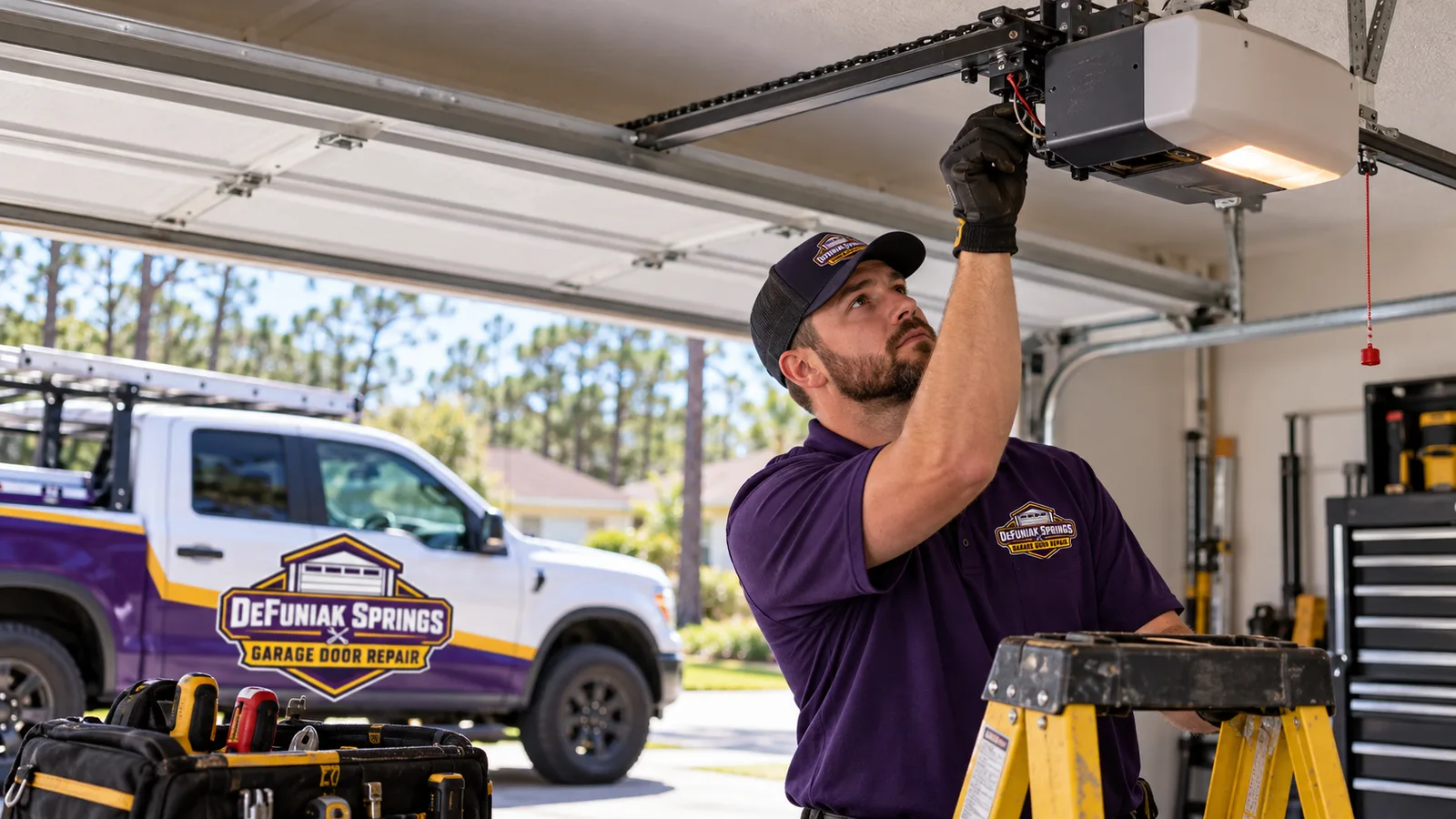
When the wall control does nothing, the remote works only sometimes, or the opener stops and reverses, the fault may be in the controls, safety system, drive assembly, or opener itself. DeFuniak Springs Garage Door Repair provides garage door opener repair in DeFuniak Springs, FL, with troubleshooting focused on the actual cause rather than a single symptom.
An opener is one part of a complete door system. The motor moves the door through a belt, chain, or screw-drive rail, while springs counterbalance the door's weight. Tracks, rollers, hinges, cables, photo-eye sensors, travel limits, and force settings all affect operation. A door that is heavy or binding can make a working opener appear defective and place added strain on its internal gears. That is why a useful diagnosis includes both the opener and the door it operates.
Northwest Florida's humidity, wind-driven rain, and frequent thunderstorms can affect garage equipment. Moisture and corrosion may contribute to unreliable electrical connections, while power interruptions or surges can reset controls or expose an already weak circuit board. Inspection helps separate those conditions from alignment, wiring, mechanical, and programming problems.
Garage Door Opener Problems We Diagnose
Unresponsive controls
A dead wall console or remote may point to lost power, depleted batteries, damaged wiring, a lock-mode setting, lost programming, or a failed receiver or logic board.
Door reverses or will not close
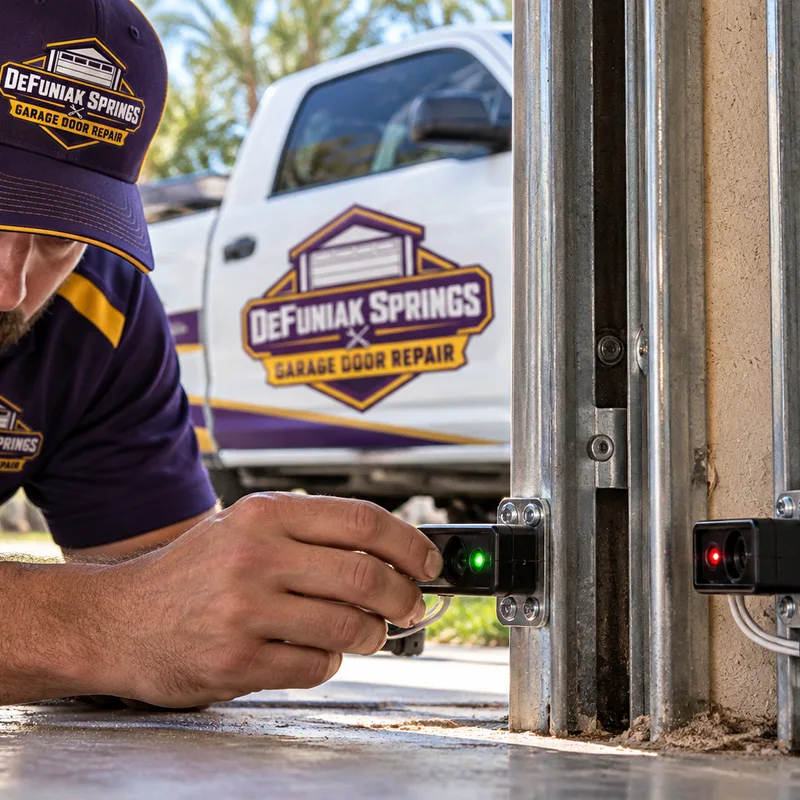
Misaligned photo eyes, blocked sensor paths, loose low-voltage wires, incorrect travel limits, and excess door resistance can interrupt closing.
Motor runs but the door does not move
This symptom may involve a stripped drive gear, disconnected trolley, worn belt or chain components, or a door that has become mechanically stuck.
Grinding, rattling, or humming
Noise can come from loose hardware, rail or trolley wear, drive tension, internal gears, or an opener trying to lift a poorly balanced door.
Remote or keypad trouble
Battery condition, programming, radio interference, receiver faults, and keypad wear are checked before replacement is considered.
Lights or backup power malfunction
Bulbs, sockets, light controls, battery units, and related opener electronics can be tested when these accessories stop operating correctly.
Repair Starts With the Whole Door System
A garage door opener should guide a balanced door, not supply the lifting force by itself. With the opener disconnected, a properly functioning door should move manually without severe binding or excessive weight. If it drops, shoots upward, or is difficult to lift, the underlying problem may involve the counterbalance system rather than the opener.
DeFuniak Springs Garage Door Repair checks visible door movement, roller travel, track condition, trolley engagement, drive tension, safety reversal, and control response. The inspection can also identify cracked mounting points or loose brackets that let the opener rail flex during operation. If the problem belongs to the broader door system, garage door repair may need to be addressed before opener adjustments can hold.
Homeowners should avoid adjusting torsion springs, extension springs, lift cables, or bottom brackets. Those components remain under significant tension. Safe homeowner checks are limited to confirming that the opener has power, replacing remote batteries, clearing the sensor path, and looking for an accidentally engaged wall-console lock setting.
How Opener Troubleshooting and Repair Works
-
01
Inspect the door and opener
DeFuniak Springs Garage Door Repair evaluates door balance, travel resistance, mounting, rail and trolley condition, drive components, controls, sensors, and accessible wiring.
-
02
Identify the failed component
The findings distinguish a programming or adjustment issue from a damaged part, electrical fault, or mechanical door problem.
-
03
Review the repair scope
The proposed work should identify what needs attention and whether the opener's condition makes repair practical.
-
04
Repair and test operation
After approved work, the system is cycled to check opening, closing, travel limits, control response, photo-eye interruption, and safety reversal.
When Repair Makes Sense and When Replacement May Be Better
Repair often makes sense when the opener is otherwise in sound condition and the fault is limited to a sensor, remote, keypad, switch, wiring connection, trolley, gear, or adjustment. A clear diagnosis matters because replacing remotes will not correct a failing receiver, and changing an opener will not fix a heavy door with a spring problem.
Replacement may be worth considering when major parts are unavailable, the rail or housing is badly damaged, several expensive components have failed, or the unit lacks functions the homeowner now needs. The condition of the door must still be corrected first if poor balance or binding contributed to the failure.
Compatibility also matters. Remotes, keypads, logic boards, sensors, and battery systems are not universal. Brand, model number, manufacturing information, radio frequency, and connector type may determine which parts work. Keeping a photo of the opener label can help identify the equipment before service.
Key Opener Components
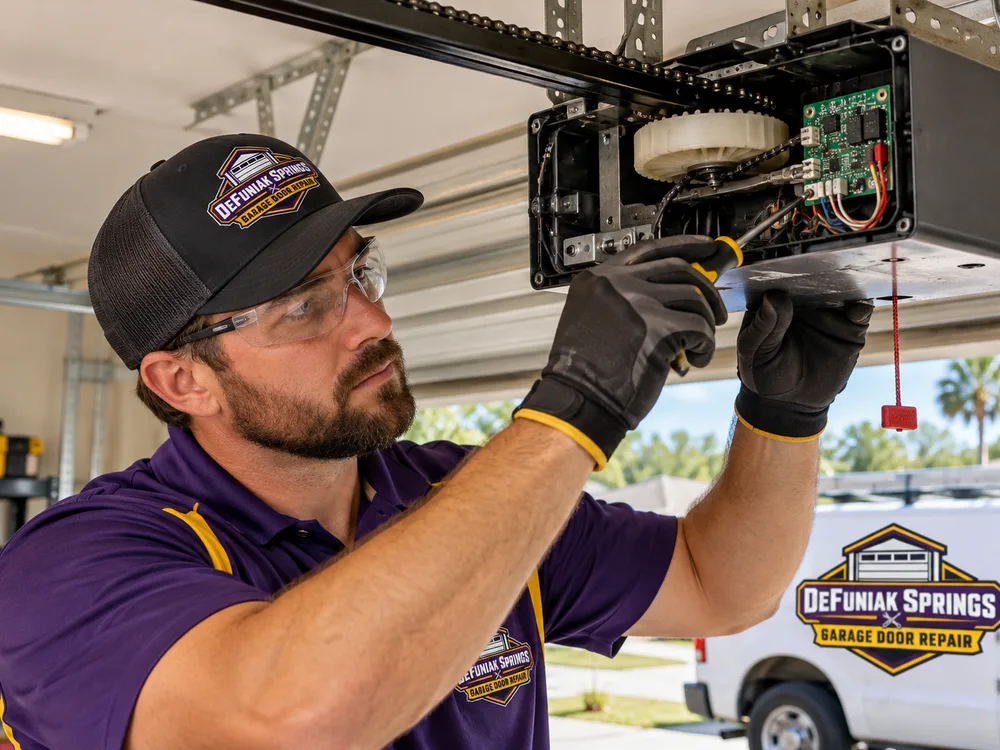
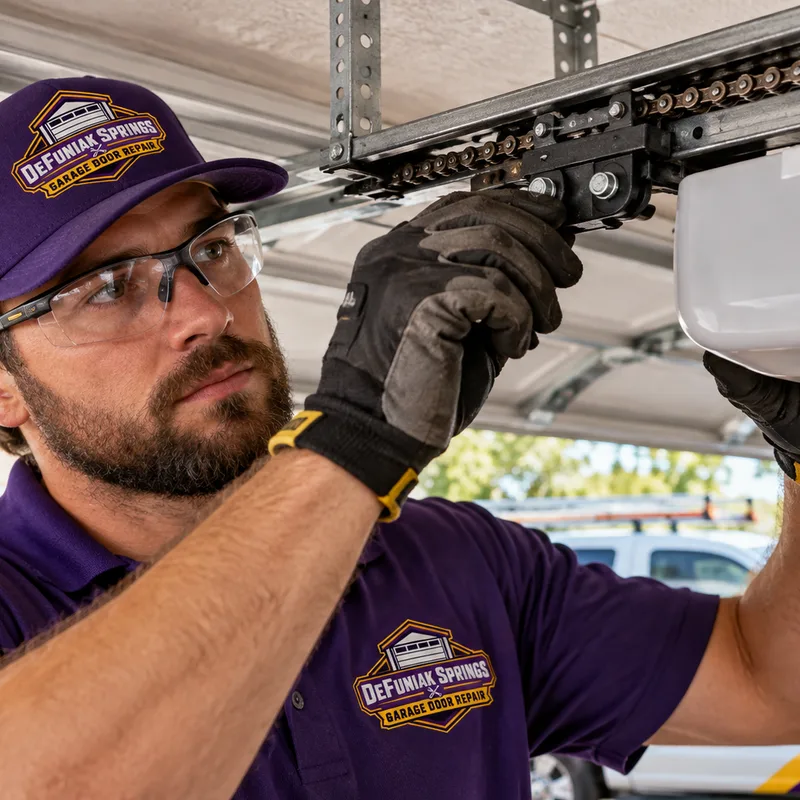
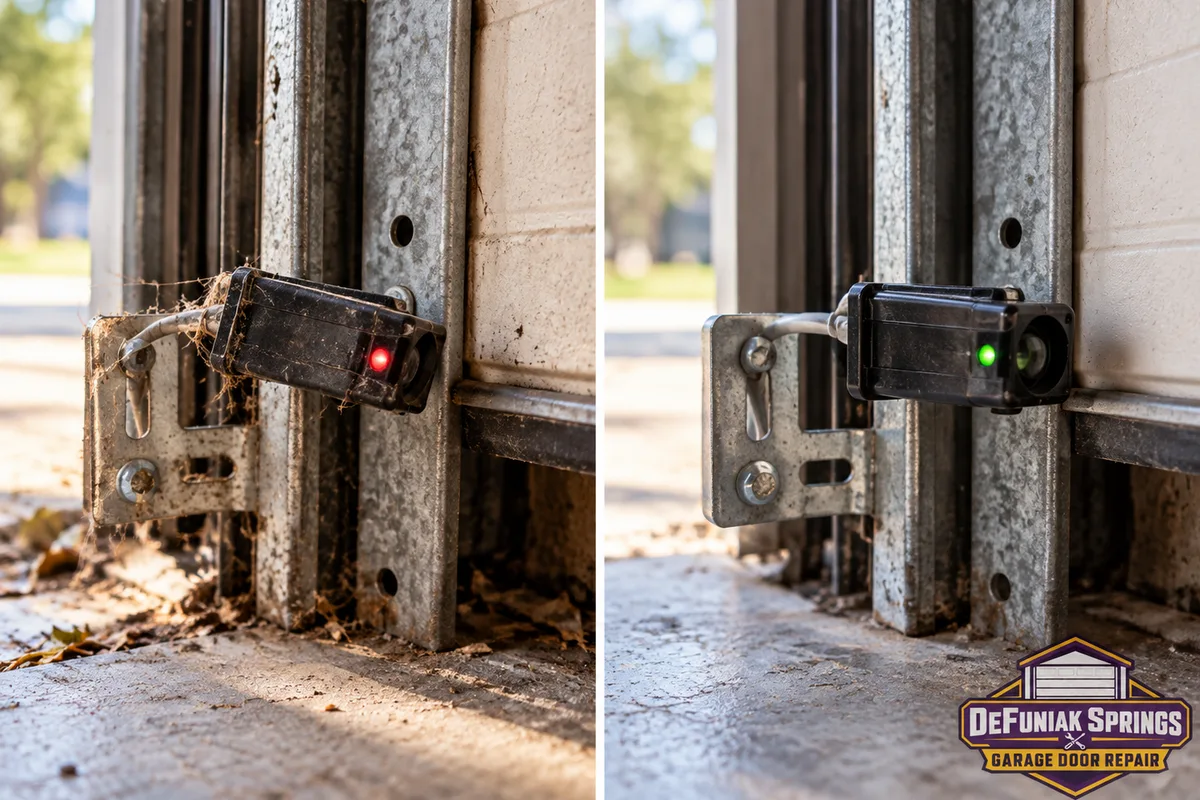
An opener that will not move the door may have a problem with the controls, drive, sensors, motor, or door mechanism. A focused inspection can identify what needs attention.
CALL NOW: (448) 333-1724Garage Door Opener Repair Questions
Why does my garage door open but refuse to close?
A blocked, dirty, misaligned, or poorly connected photo-eye sensor is a common cause, but incorrect travel settings and door resistance can produce similar behavior. Check for objects near the bottom of the tracks and gently clean the sensor lenses. If a sensor light is off or blinking, the alignment or low-voltage wiring may need attention. Do not bypass the sensors, because they are part of the automatic opener's entrapment-protection system.
Can a garage door opener be repaired during a power problem?
Diagnosis may be possible once safe, stable power is available, but electrical conditions must be separated from opener failure. After a Northwest Florida thunderstorm or outage, first confirm that the receptacle and applicable breaker or GFCI device are working. A surge can affect programming or electronics, while a tripped circuit can make a healthy opener appear dead. Avoid opening the motor housing unless the power is disconnected and the work is appropriate for a trained technician.
Why does the opener hum without moving the garage door?
Humming often means the motor is receiving power but cannot transfer motion or overcome resistance. Possible causes include a stripped internal gear, jammed trolley, damaged drive component, seized door hardware, or a door made heavy by a counterbalance problem. Stop repeated attempts if the opener strains, because continued cycling can worsen internal damage.
Should I repair or replace an older garage door opener?
Repair is reasonable when the needed part is available and the rest of the opener and door are in serviceable condition. Replacement may be more practical when several major components have failed, structural parts are damaged, or compatible electronics are unavailable. DeFuniak Springs Garage Door Repair can assess the model, failure, door balance, and repair scope before you choose.
Can you fix a remote that works only from inside the garage?
Yes, the cause can often be narrowed down by checking the battery, remote programming, antenna position, receiver response, and nearby radio interference. Certain LED bulbs and other electrical devices may interfere with an opener's radio signal. The remote model must also be compatible with the opener's brand, generation, and frequency.
How long does garage door opener repair take?
Many adjustments and accessible component repairs can be completed in one service visit, but timing depends on diagnosis and part availability. Sensor alignment, programming, and minor wiring typically take less time than internal gear, motor, or logic-board work. Model-specific parts may require additional time if they are not readily available.
Can I keep using the door manually while the opener is broken?
Manual use may be possible only if the door is intact, balanced, and safe to move. Pulling the emergency release disconnects the trolley, but it can allow an unbalanced or damaged door to fall. If the door feels unusually heavy, will not stay in place, has a loose cable, or sits crooked, leave it closed and arrange an inspection.
Get Your Garage Door Opener Working Properly Again
A focused diagnosis establishes the repair scope based on the condition of the opener and door.