
Garage Door Spring Repair in DeFuniak Springs, FL
Restore balanced door movement with a careful inspection, correctly matched replacement springs, and a complete operating check.
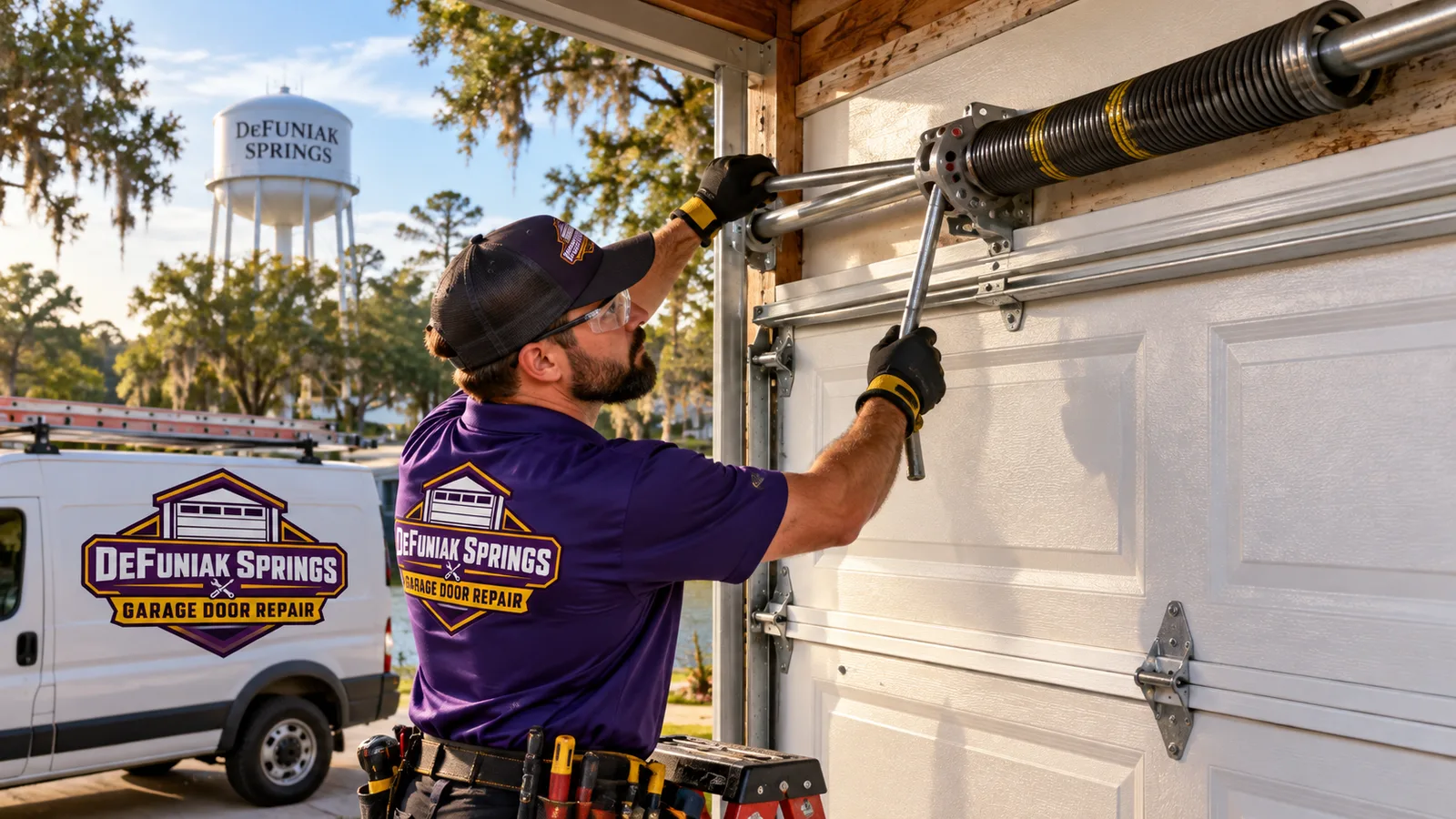
Garage Door Spring Repair DeFuniak Springs FL Homeowners Can Arrange
A broken or worn spring can leave a garage door unusually heavy, crooked, noisy, or unable to open. DeFuniak Springs Garage Door Repair provides garage door spring repair in DeFuniak Springs, FL for doors with failed torsion springs, damaged extension springs, poor balance, or spring-related operating trouble.
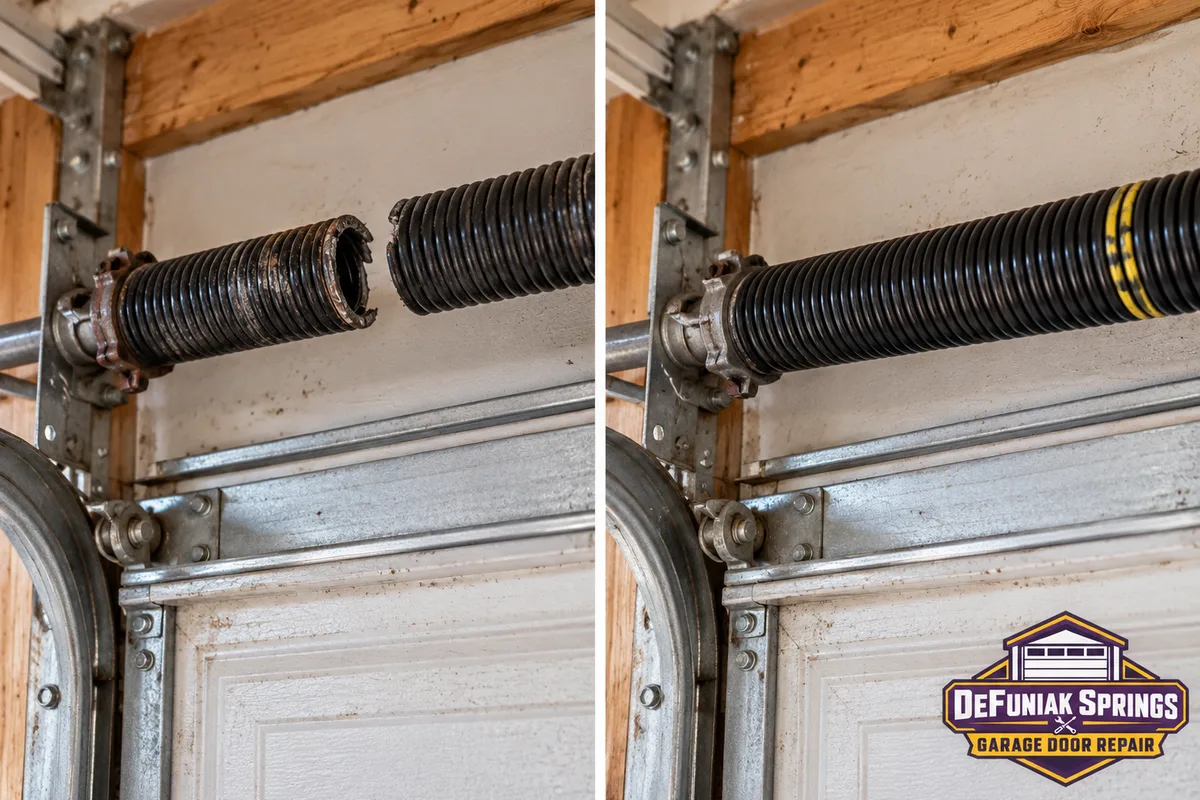
Garage door springs counterbalance the weight of the door. When a spring breaks, the opener may be unable to lift the door, and repeatedly pressing the remote can strain the opener or pull the door out of alignment. A loud bang from the garage, a visible gap in a torsion spring, loose extension coils, or cables hanging near the tracks all justify stopping operation and arranging an inspection.
Do not pull the emergency release while a raised door may be unsupported. A door with a failed spring can descend standardly. Keep people, pets, and vehicles away from its path, leave spring hardware untouched, and note the door's position and symptoms before service.
What a Spring Repair Should Address
Spring repair starts by identifying the system and the reason the door no longer balances. Torsion springs are mounted on a shaft above the opening and apply torque through cable drums. Extension springs stretch alongside the horizontal tracks and should have containment cables. These systems use different parts and procedures, so a replacement must match the door rather than merely resemble the old spring.
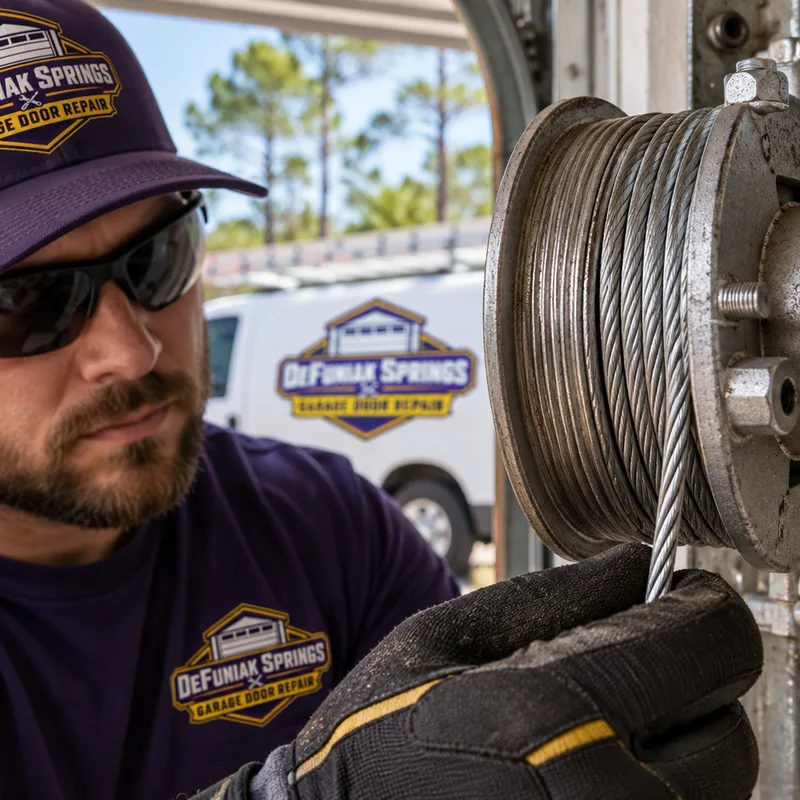
The technician checks the door's approximate weight and height, spring dimensions, wire size, winding direction, track condition, lift cables, drums, bearings, center bracket, and bottom fixtures. Visible rust, distorted coils, frayed cables, or a shaft that has shifted can affect the scope. The opener is also considered because spring trouble can resemble an opener failure.
After installation, the springs are tensioned and the door is tested manually. A properly balanced door should move without binding and should not race upward or drop heavily. The opener can then be reconnected and tested. If the inspection shows that the trouble is not limited to the springs, garage door repair in DeFuniak Springs can address the broader operating problem.
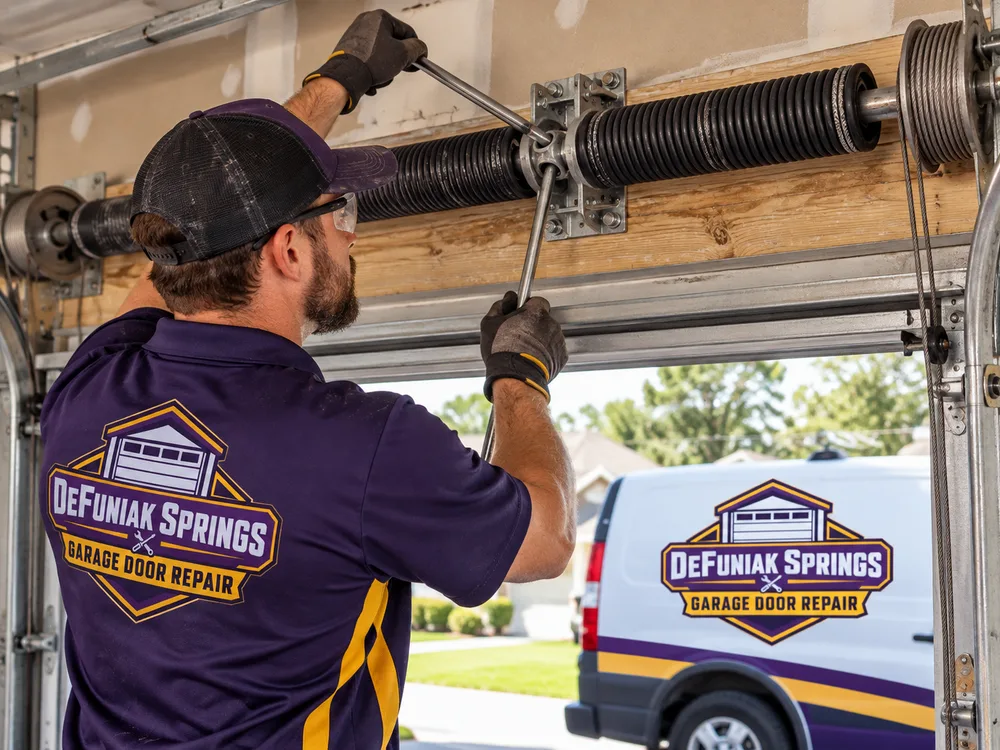
Signs the Springs Need Attention
The door feels unusually heavy
A door that is difficult to lift by hand may have lost part or all of its spring assistance. Stop testing it if the door will not remain controlled.
A gap appears in a torsion spring
A separated coil is a common visible sign of a broken torsion spring. Do not touch the spring, winding cone, shaft, or set screws.
The door rises unevenly
A crooked door can point to unequal spring force, a cable problem, or a cable that has left its drum. Continued operation may worsen track and roller trouble.
The opener strains or stops
The opener is designed to move a balanced door. Grinding, slow travel, or reversal can occur when it is trying to lift more weight than intended.
A loud bang came from the garage
A spring can make a sharp sound when it breaks, even when nobody is operating the door. Inspect only from a safe distance.
The door closes too standardly
A door that drops or accelerates during manual movement may have inadequate spring support. Keep the opening clear and arrange an inspection.
Spring Selection, Safety, and Florida Conditions
Replacement springs are selected using measurements and door characteristics, not color alone. Wire diameter, inside diameter, spring length, wind direction, door height, drum type, and door weight affect the required torque. Added insulation, glass, reinforcement, or replacement panels can change the weight compared with the original setup.
Spring work involves stored mechanical energy. Torsion springs require correctly sized winding bars and controlled winding procedures. Screwdrivers, socket extensions, and improvised rods are not substitutes. Extension systems also need restraint because a spring or pulley can become a projectile if hardware fails. Bottom brackets are especially hazardous because lift cables remain under tension at those fixtures.
DeFuniak Springs has a humid, rain-prone North Florida climate. Moisture can contribute to surface corrosion on springs, cables, bearings, and fasteners, particularly when a garage stays damp or the door is exposed to wind-driven rain. Corrosion alone does not determine whether a spring requires replacement, but it belongs in the inspection because pitting and damaged wire can weaken a component.
A lubricant made for garage door components can reduce friction and noise on appropriate moving parts, but lubrication cannot restore a cracked, stretched, incorrectly sized, or broken spring. Keep tracks clean rather than coating them with grease, and never apply lubricant as a reason to handle a spring or winding cone.
How DeFuniak Springs Garage Door Repair Handles Spring Service
-
01
Inspect the complete counterbalance system
DeFuniak Springs Garage Door Repair identifies the spring system and checks related hardware, door condition, balance, and opener behavior before confirming the repair scope.
-
02
Match and install the spring components
The replacement is selected for the door's weight and setup. The door is secured while the failed components are removed and the new springs are installed and tensioned.
-
03
Set balance and cable position
Spring tension is adjusted while cable seating, drum alignment, and door travel are checked. The goal is controlled manual movement through the opening.
-
04
Test the finished operation
The door is cycled by hand before opener operation is checked. Safety reversal and photo-eye function can then be tested as part of the final operating check.
Details Checked During Spring Repair
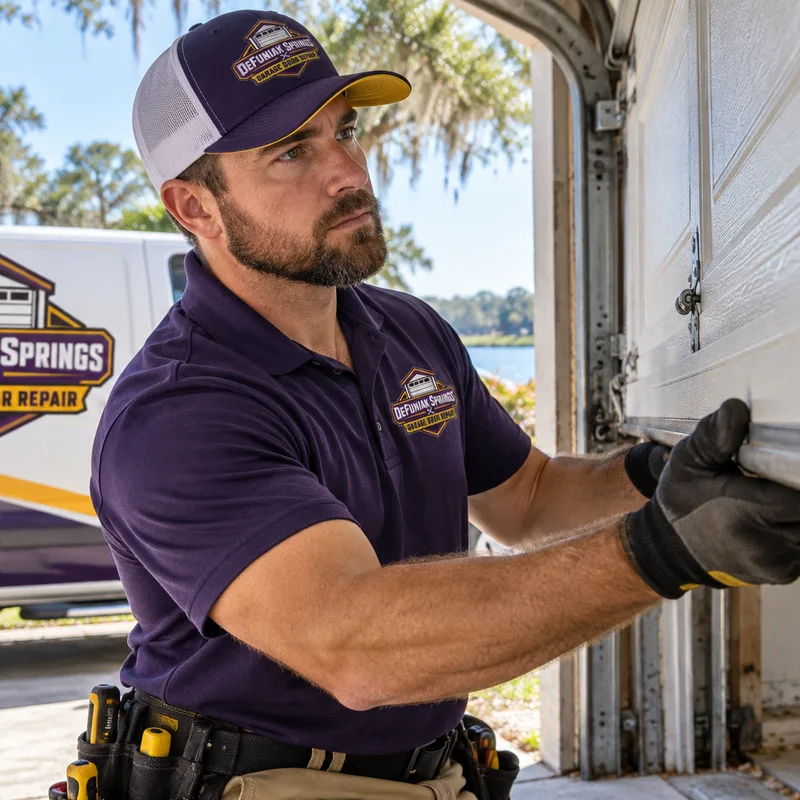
If the door is stuck, crooked, or unusually heavy, leave it in the safest available position and arrange an inspection before operating it again.
CALL NOW: (448) 333-1724Garage Door Spring Repair Questions
Can I open my garage door after a spring breaks?
Avoid operating a garage door with a broken spring unless a trained technician has assessed it. The door may be much heavier than expected, and the opener can be damaged while trying to lift it. If the door is raised, keep the area clear because it may not remain supported.
How long does garage door spring repair take in DeFuniak Springs?
Many straightforward residential spring replacements can be completed during one service visit once the correct parts are available. The actual time depends on the spring system, access, corrosion, and whether cables, drums, bearings, brackets, or tracks also need attention.
Should both torsion springs be replaced if only one broke?
Replacing both may be appropriate when a two-spring system has springs of the same age and service history, but the choice should follow an inspection. Matching spring output matters, and the technician should consider cycle wear, door weight, dimensions, and the condition of the remaining spring before confirming the scope.
Can a broken spring damage the garage door opener?
Yes, attempting to run the opener against an unbalanced door can strain its drive and internal parts. Stop using the opener if the door has become heavy, moves unevenly, or a spring has separated. The spring system should be repaired and the door manually balanced before opener testing.
Is a loud bang always a broken garage door spring?
No, but a broken torsion spring is one common cause of a sudden bang in a garage. Look from a safe distance for a gap in the spring above the door, loose cables, or a door that will not lift normally. DeFuniak Springs Garage Door Repair can inspect the system and identify the failed component.
Does surface rust mean the springs must be replaced?
Surface rust does not automatically require replacement, but deep corrosion, pitting, damaged wire, distortion, or poor balance can justify new springs. Humid North Florida conditions make it sensible to include corrosion in the inspection of springs, cables, bearings, and fasteners.
Why did the new spring change how the door moves?
A correctly matched and adjusted spring should restore controlled, balanced movement. If the door rises on its own, drops heavily, binds, or sits crooked, the spring tension, spring sizing, cables, drums, tracks, or door weight may need further evaluation.
Restore Safe, Balanced Garage Door Movement
A focused inspection can identify failed spring components and establish the repair scope before work begins.